In hospitals across Uganda, working medical equipment sits idle. Not because it is broken beyond repair (often a device needs nothing more than a trained hand and the right diagnosis), but because too few people know how to bring it back to life.
Studies of low-resource hospitals suggest that a large share of out-of-service equipment could be repaired locally, without importing a single new part. The missing ingredient is rarely the spare. It is the skill.
This July, over two intensive weeks, we set out to grow that skill, one student at a time.
Together with Kyambogo University, OLK Health Tech Consults ran the KYU Biomedical Engineering Students Medical Equipment Training: 30 biomedical engineering students, four groups, and a simple, stubborn belief that the best way to learn how equipment works is to open it up and get your hands inside it.
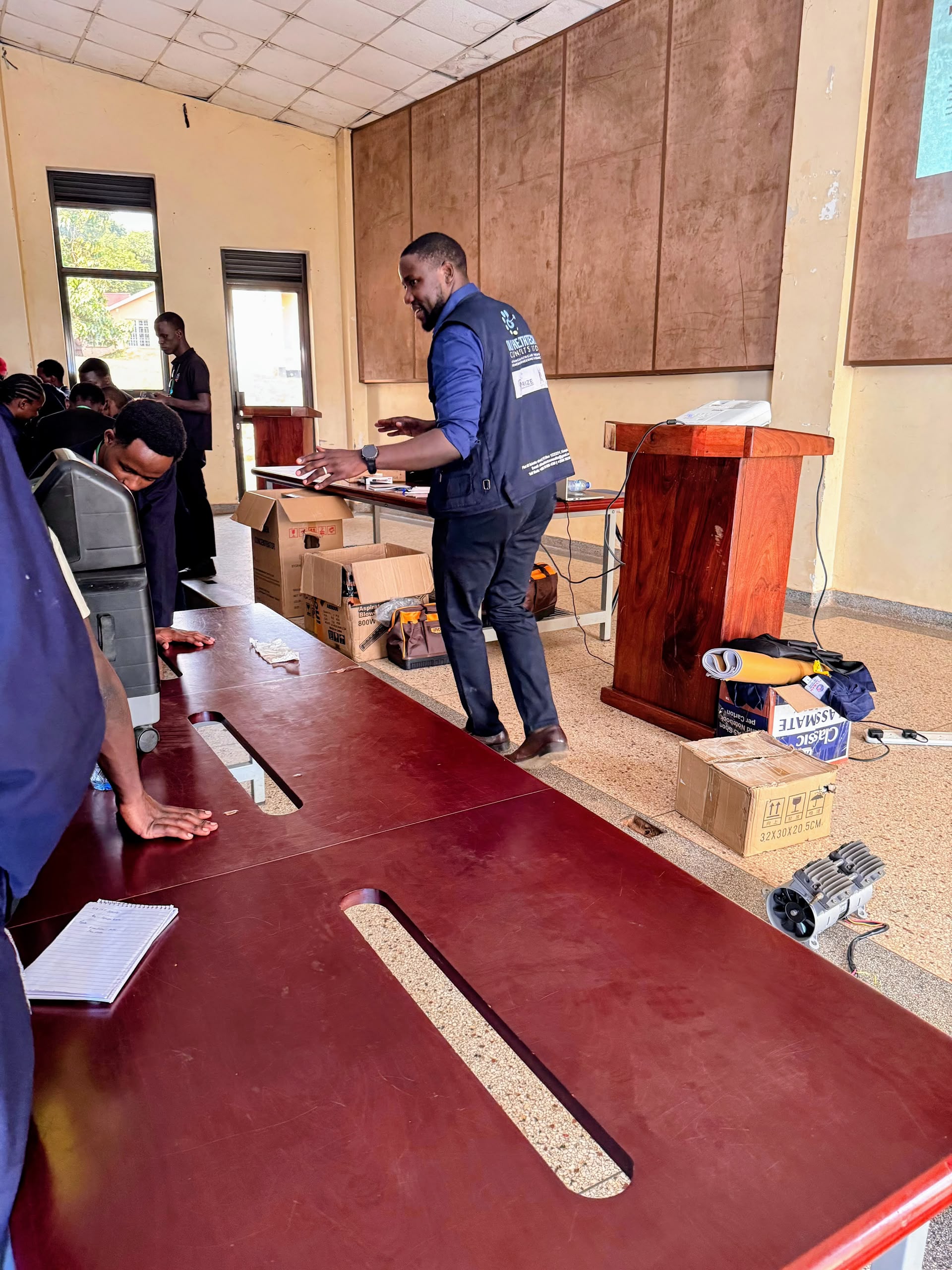
Not a lecture. A workbench.
Most of our students arrived with plenty of theory and almost no time holding a real device. So we flipped the usual order. From day one, the classroom was a workbench.
We started with the foundations: how a measurement chain carries a signal from a patient to a screen, what sensors and transducers actually do, and why a confident-but-wrong reading is more dangerous than an obvious fault. Then we went straight to the machines that keep patients breathing and safe.
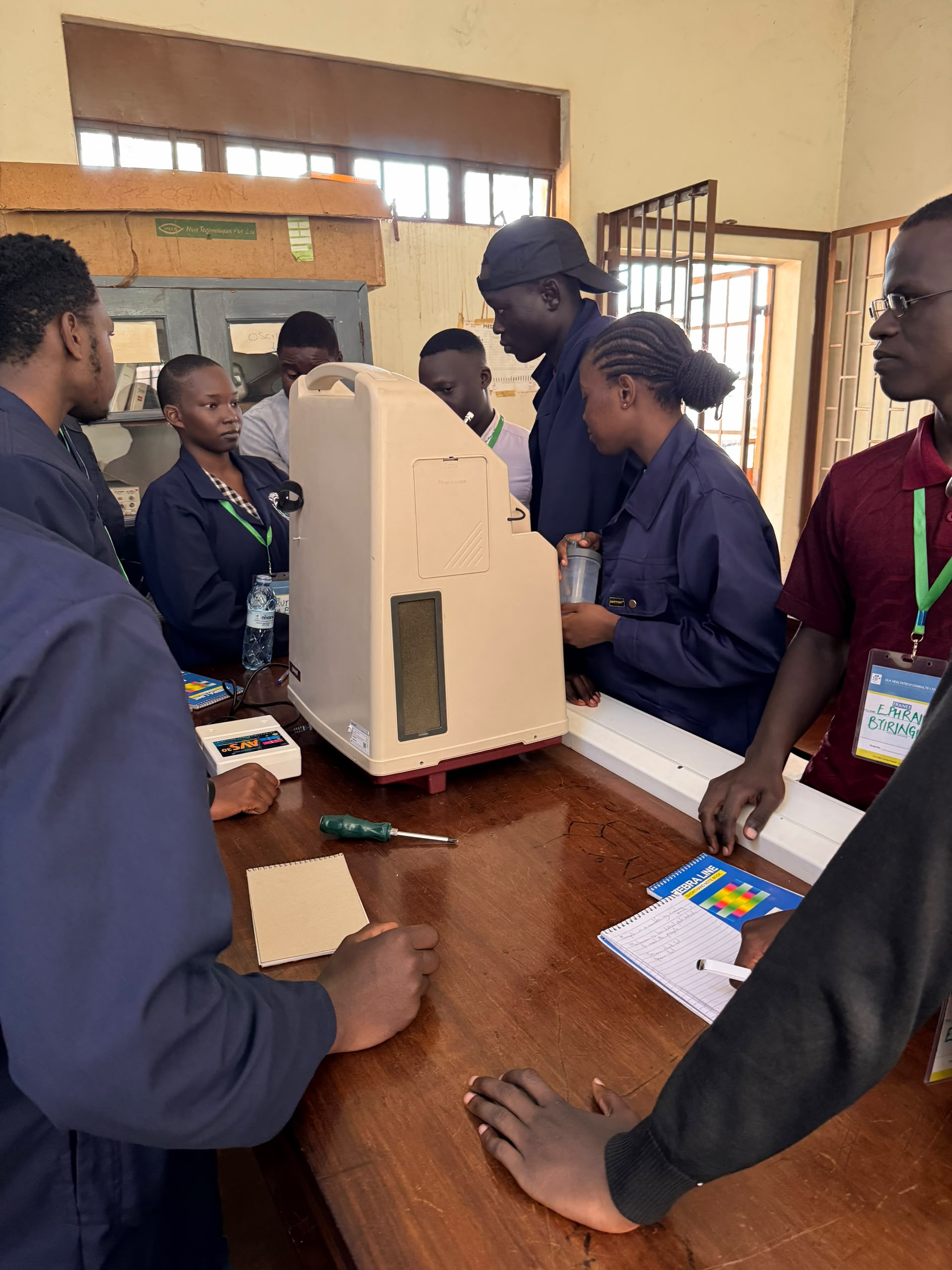
Oxygen concentrators & air compressors
How they separate and deliver oxygen, and how to trace a fault when they fail.
Autoclaves & steam sterilizers
The temperature, pressure and time that stand between a clean instrument and an infection.
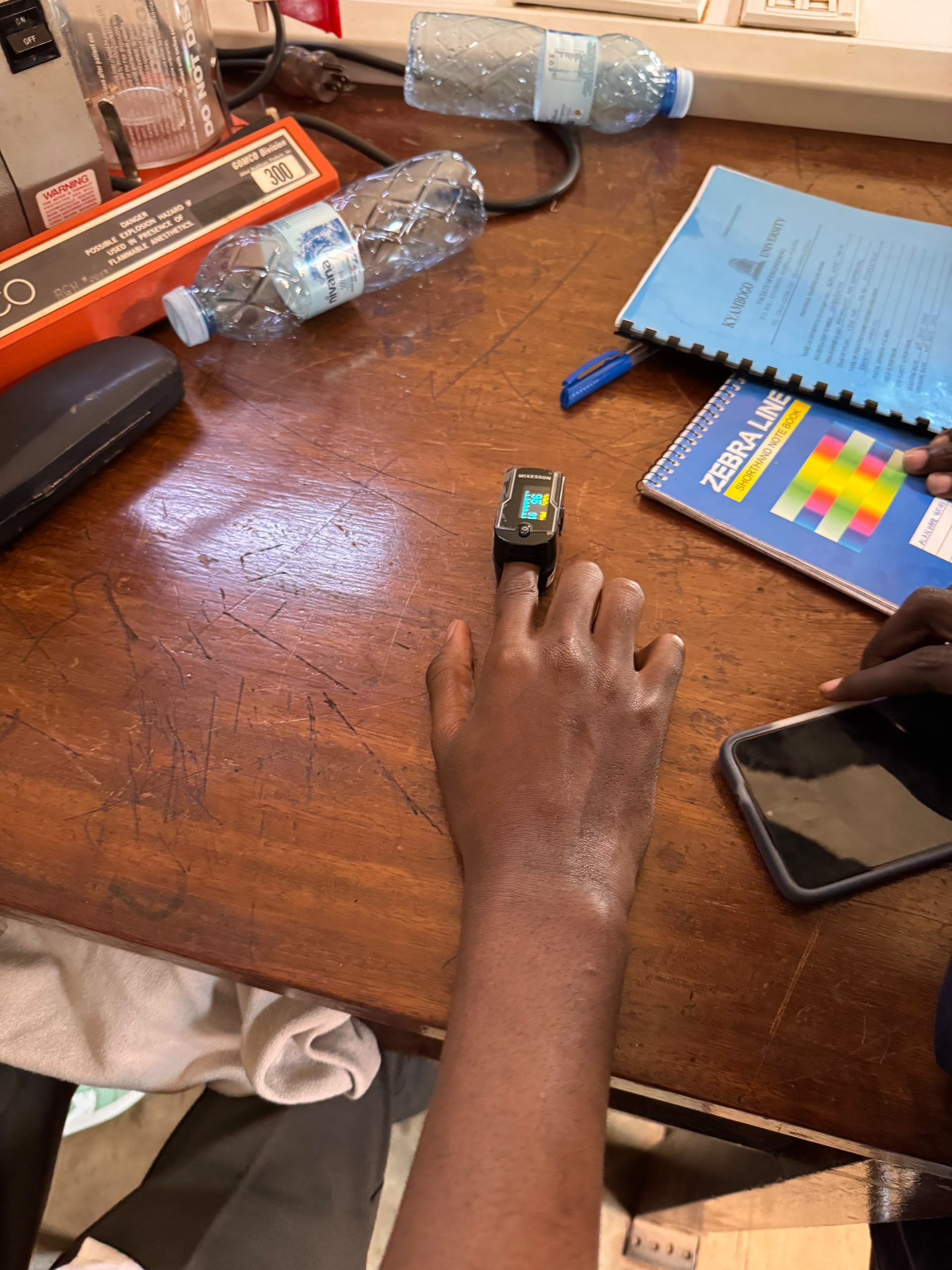
Patient monitors
ECG, SpO₂, blood pressure and temperature, and the physiology behind every waveform.
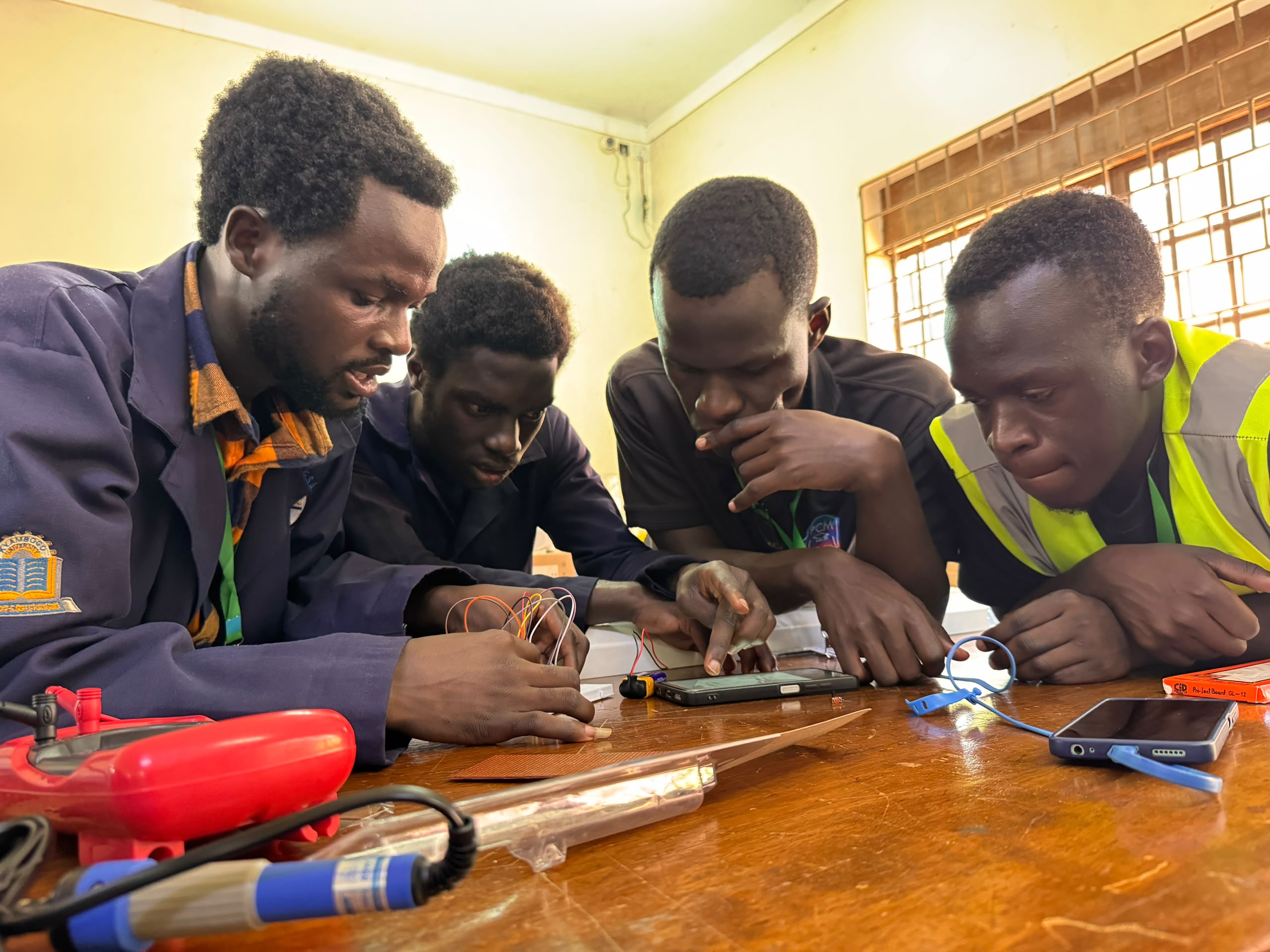
Hands-on electronics
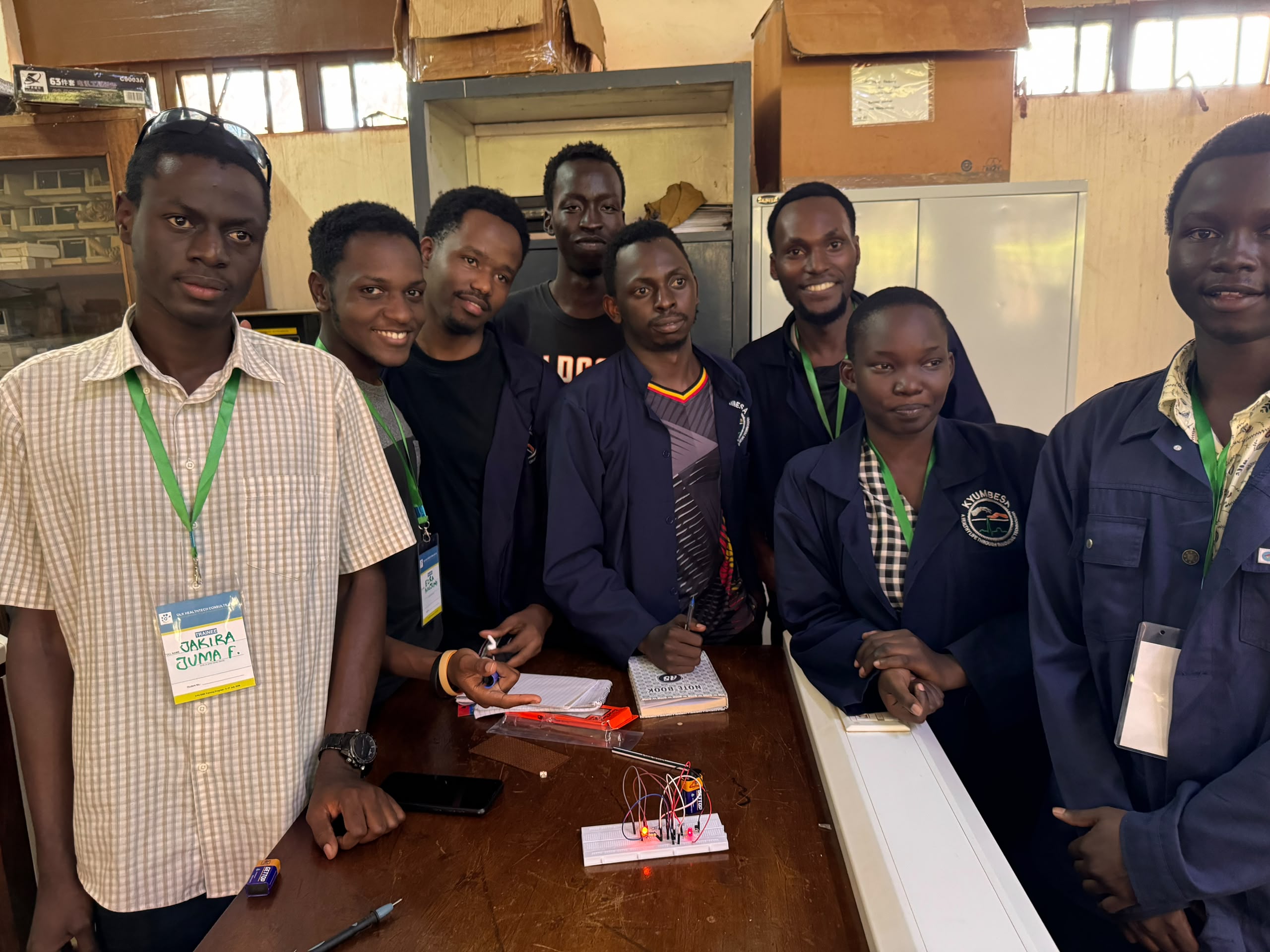
Students built a live circuit of their own, from a breadboard to a soldered board.
Every device was opened, studied part by part, diagnosed, and understood. Not described from a slide, but explored with a multimeter in hand.
What changed in two weeks
We measure everything we do, because good intentions are not evidence. So we asked our students, before and after, how confident they felt, and we tested what they had actually retained.
The results moved us.
Confidence rose by 65% across every single skill, with the biggest jumps in exactly the areas that matter most: maintaining oxygen equipment and understanding patient monitors.
More than 8 in 10 arrived with little or no hands-on experience before the program began.
Cohort average on a short knowledge check spanning the whole program.
They rated the training 4.8 out of 5. And when we asked how likely they were to recommend it to a fellow student, not one said they wouldn't.
But the numbers only tell half the story.
In their own words
There are not many institutions that let an intern really get hands-on by disassembling equipment for detailed study. That alone makes this training a huge win. I cannot recommend it enough.
This training showed me that biomedical engineering is not just about learning concepts, it's about applying them to improve healthcare. The hands-on experience has inspired me to make a meaningful impact in the medical field.
The most valuable thing I gained was confidence, and the assurance that the theory I am studying is actually applicable in my field.
One student put it most simply of all:
“Just yesterday, I couldn't say if I would stand firm and confidently explain my role as a biomedical engineer. Now I am very confident. My role is much more than I thought.”
That shift, from uncertainty to purpose, is the outcome we care about most.
The people who made it happen
A program like this is a team effort, and we are deeply grateful.
Thank you to Kyambogo University for opening your doors, trusting us with your students, and believing in a partnership built on practical skill. To our facilitators, Moses Luswata, Mirimu Edward and Kigenyi Douglas: thank you for the long hours and the patience that turned theory into competence at the bench. And to John Wamala, Lecturer at Kyambogo University, thank you for walking every step of this journey with us.
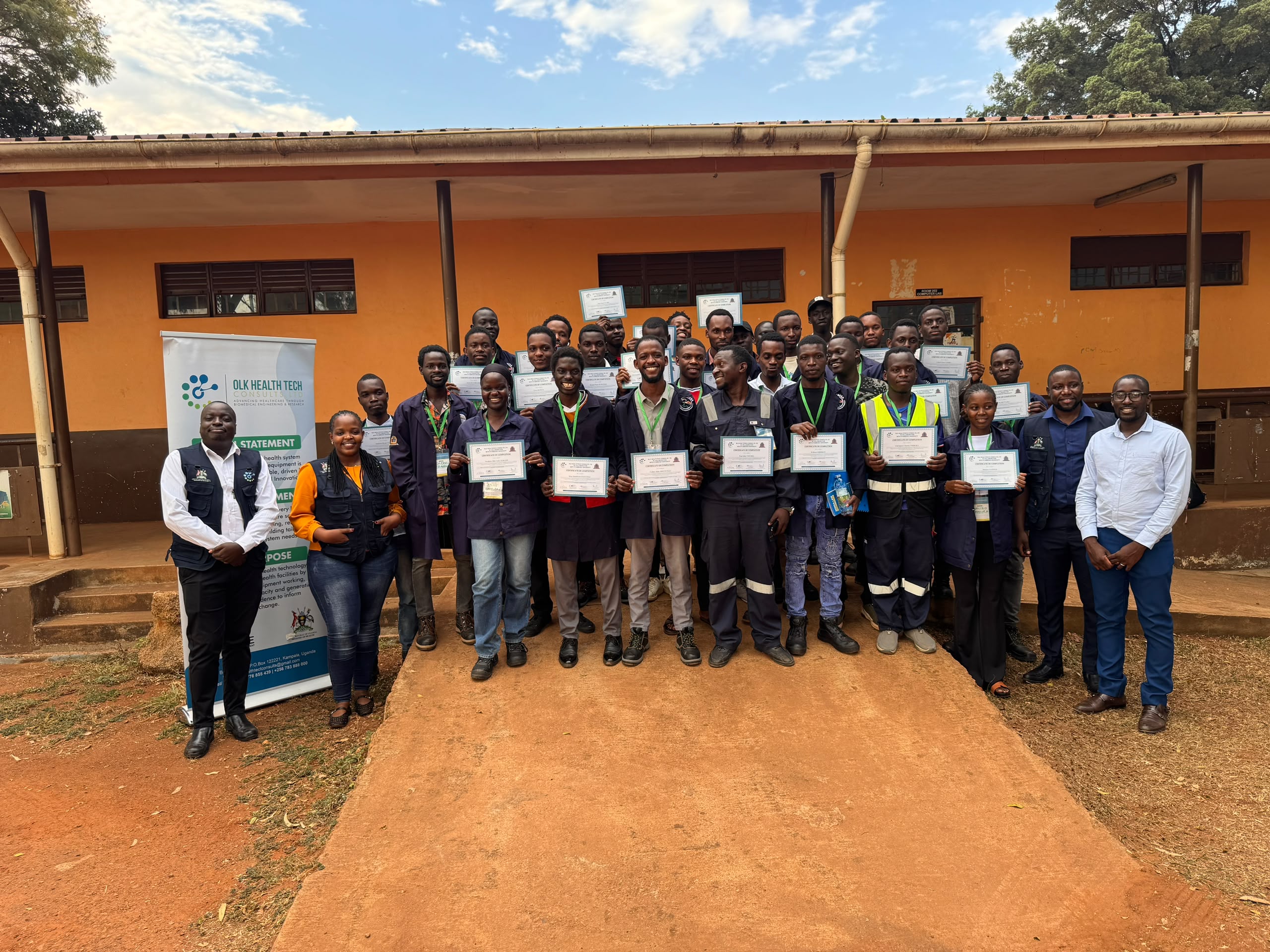
Most of all, thank you to our 30 students. Your curiosity was the engine of these two weeks.
What comes next
When we asked how we could improve, the answer was almost unanimous, and it was the best kind of feedback we could have hoped for: give us more. More time. More equipment. More devices to take apart. Students asked for longer programs, imaging equipment, microcontrollers, and the chance to carry out real repairs in the facilities that need them.
We hear you. This first edition was proof of concept. The next will be bigger.
Because every student who learns to keep an oxygen concentrator running is, quite literally, keeping a patient breathing. That is the future of healthcare in Uganda: locally owned, hands-on and sustainable, and it is being built right now, one trained engineer at a time.
How you can help
Here is the honest truth behind that "give us more": hands-on training runs on hands-on resources. The single biggest thing standing between us and a bigger, longer, deeper next cohort is equipment for students to learn on.
We are calling on hospitals, manufacturers, distributors, partners and individuals to help us build the next generation of biomedical engineers. Specifically, we welcome:
Medical equipment for training
Working or faulty. An oxygen concentrator, patient monitor, autoclave, suction machine or ECG unit that is retired, decommissioned or gathering dust can become the device that teaches thirty students to save it. Faulty is perfectly fine: a broken machine is our best classroom.
Tools & consumables
Multimeters, soldering kits, hand tools, spare parts, components and testing gear that let more students work at once.
Partnership & sponsorship
To fund places for students, extend the program, and reach more of Uganda.
Your expertise
Biomedical engineers, technicians and trainers who want to join us and pass on what they know.
If you have equipment to donate, tools to share, or a partnership in mind, or if you simply want to join us, we would love to hear from you.
Get in touch
Every device you pass on, every tool you share, and every hand you extend helps keep Uganda's life-saving equipment, and its patients, alive.