When the OLK HealthTech Consults team arrived at Tororo General Hospital in late November 2025, they found something that is quietly common across Uganda's public health system: a hospital that had the equipment but had lost the ability to use it.
Of the 24 oxygen concentrators distributed across the hospital's wards, only six were working. Four of those six were delivering oxygen at sub-standard purity levels, meaning patients were receiving therapy that was clinically inadequate. The rest had been sitting idle, some for months, some for over a year, not because they were beyond repair, but because no one had the time, the training, or the tools to fix them.
This is the oxygen crisis that does not make headlines. It is not about empty shelves or missing supplies. It is about equipment that exists, that was purchased at significant public cost, that is present in the ward, and that simply does not work.
OLK HealthTech went to Tororo to test a different kind of solution.
The Idea: Embed the Expertise
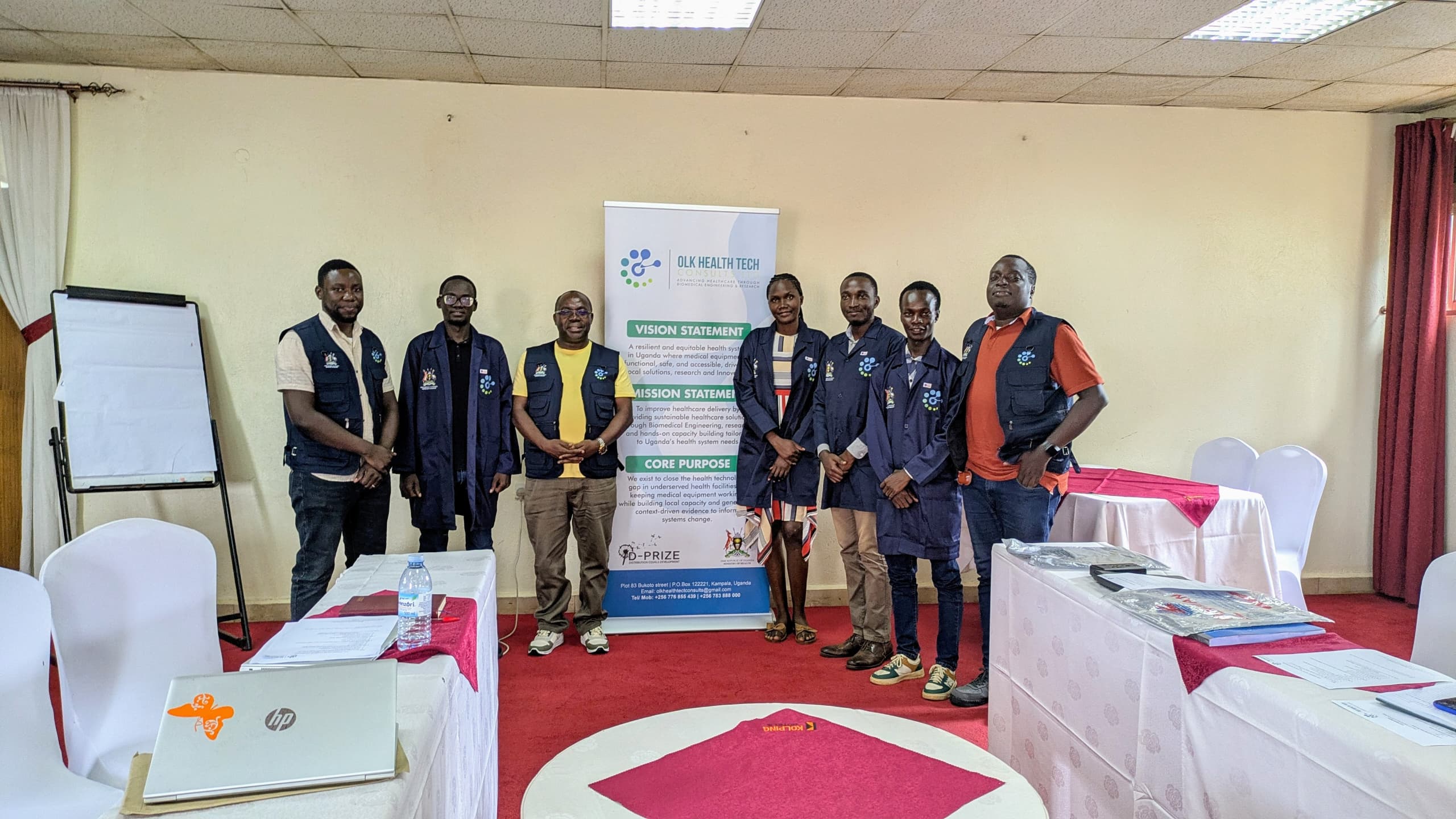
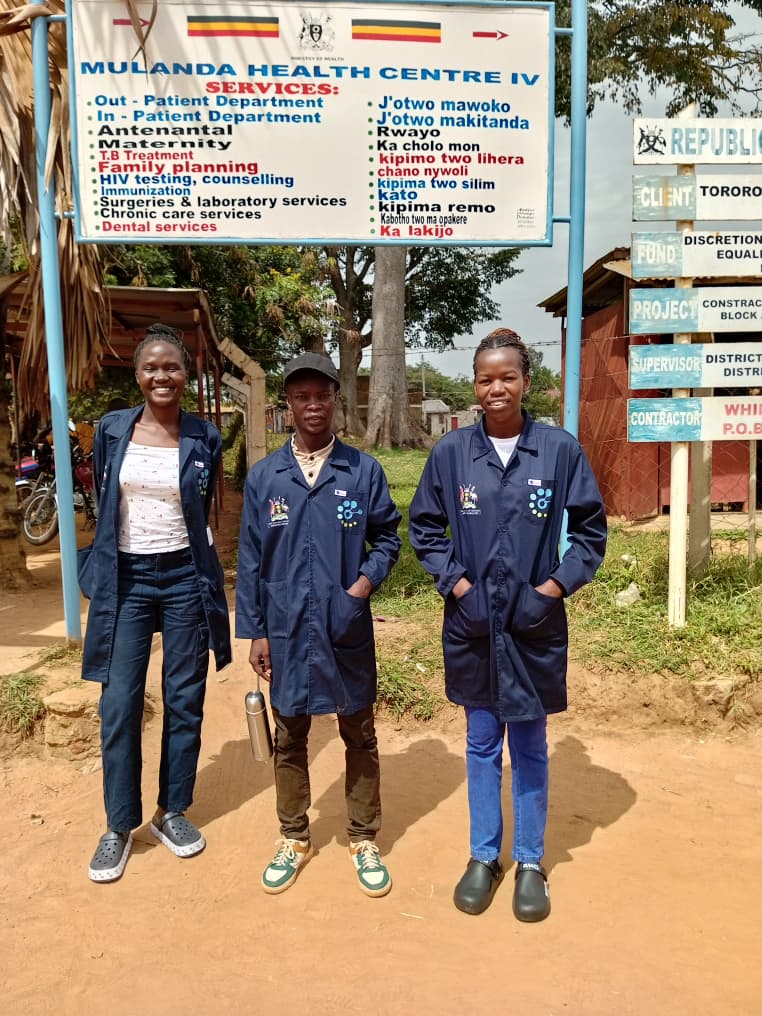
With support from a D-Prize grant, OLK deployed five supervised biomedical engineering graduates to Tororo General Hospital and three surrounding Health Centre IVs — Nagongera, Mukujju, and Mulanda — for a focused three-month pilot. The model was straightforward: put skilled people inside the facility, give them the tools and supervision they need, and let them work.
Before deployment, each graduate went through structured technical training on oxygen concentrator servicing, troubleshooting, and clinical significance assessment. Pre-deployment test scores averaged around 57%. By the end of training, scores had risen to between 75% and 94%. These were not graduates who had been taught theory. They were graduates who had been trained to do the work.
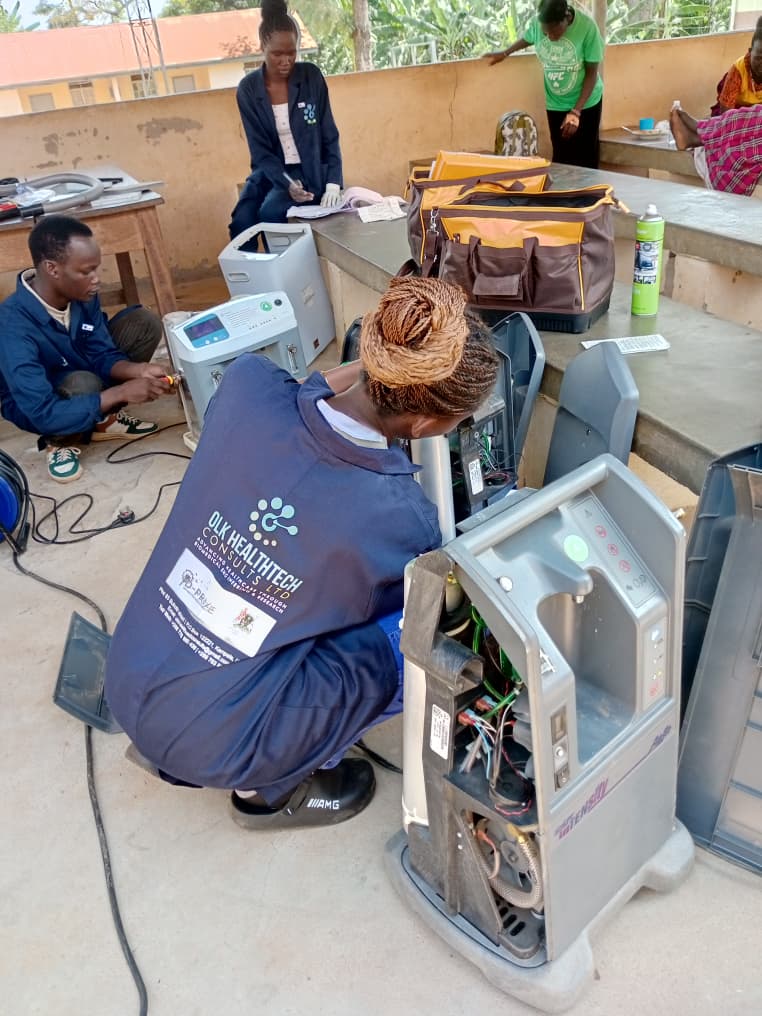
On the ground, the team structured their days around three activities: servicing and repairing equipment, conducting user training sessions with ward staff, and documenting every intervention. Weekly reports tracked progress, flagged spare part gaps, and informed daily prioritisation.
What Happened in Three Months
The results were striking — not because they were surprising, but because they confirmed what the team had always believed: that most of Uganda's oxygen equipment problem is solvable, with the right people and the right support.
By the end of the pilot, 15 oxygen concentrators were functional and in active clinical use, up from just six at the start. More than eight concentrators that had been non-functional for over a year were repaired and returned to service. Two infant incubators that had sat unused in hospital stores for six months were installed, configured, and commissioned for clinical use. The FreO2 oxygen station system in the Children's Ward, which integrates dual concentrators with cylinder backup, was fully restored, giving that ward uninterrupted oxygen supply for the first time in months.
The team delivered 308 biomedical interventions in total, including 131 critical equipment servicing sessions, 147 inspections, 42 troubleshooting visits, and 16 full repairs. They conducted 18 structured user training sessions across Theatre, NICU, Male and Female Wards, OPD, Antenatal Clinic, and Private Wing. More than 80% of the health workers trained had never received any formal training on oxygen concentrator use before. Not because training was unavailable, but because no one had ever come.
Six Heads of Department were trained as master trainers under a Training-of-Trainers model, equipping them to cascade knowledge to new staff long after the OLK team had left.
The patients? An average of 1,890 patients received oxygen therapy through the systems the team restored and maintained over the three months — 20% more than the original target of 1,575, and every single one of them served within the approved budget of USD 20,000.
The cost per patient reached: approximately USD 10.60.
What the Numbers Do Not Capture
There is a number that sits behind all of this that is harder to quantify. It is the NICU nurse who now knows how to clean a dust filter to maintain oxygen purity. The midwife who can read an alarm indicator and respond correctly instead of switching the machine off. The head of the children's ward who understands why the humidifier bottle matters and what happens when it is not managed properly.
These are not dramatic moments. They are the quiet, compounding gains that determine whether equipment stays functional after a team leaves, or whether it slowly drifts back to the state it was in before anyone came.
Sustainability was never an afterthought in this pilot. It was the point.
What We Learned
Three months in Tororo taught the OLK team five things that will shape everything they do next.
- Uganda's oxygen access problem is overwhelmingly a systems and workforce problem, not a hardware problem. The equipment is there. The capacity to maintain it is not.
- Preventive maintenance prevents crises. The majority of equipment failures the team encountered were avoidable. Early intervention is cheaper, faster, and kinder to patients than waiting for a breakdown.
- User training is as important as technical repair. A concentrator that works perfectly is still a clinical risk if the nurse operating it does not know what the alarm means. Technical and human capacity must be built together.
- Supervised graduate deployment works. With appropriate oversight, fresh biomedical engineering graduates can deliver real, meaningful field impact while building the skills that will serve Uganda's health system for decades. This is not a compromise model. It is a talent pipeline.
- Real-world implementation is messy, and that is fine. The pilot ran through festive holidays and a national election period. Timelines shifted. Plans adapted. And the results still came.
The Work Continues
Tororo was the proof of concept. The evidence is clear, the model is replicable, and the need across Uganda's public health facilities is vast. OLK HealthTech is committed to taking this work further — reaching more hospitals, training more health workers, and restoring more equipment that has been sitting idle while patients go without.
Uganda's oxygen access challenge will not be solved by procurement alone. It will be solved by building the technical systems and human capacity to keep what already exists working — every day, in every ward, for every patient who needs it.
That is the work. And we are just getting started.
OLK HealthTech Consults is a Ugandan social enterprise advancing healthcare through biomedical engineering and research. To learn more or partner with us, visit our website or contact us directly.
Get in Touch